I Think You’re Dandy and I’m Not Lion Review
As a designer who spends more time than I care to admit staring at stitch density charts and testing thread tension, I don’t just buy embroidery files; I stress-test them. When I Think You re Dandy and I m Not Lion landed on my desk, my first instinct wasn’t to immediately load it into the hoop. It was to ask: does this design actually work for a real-world project? Can it survive the wear and tear of daily use? Will it look professional when stitched out on a customer’s garment?
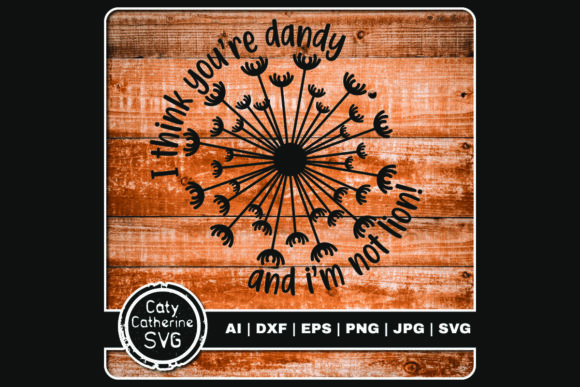
The concept itself is charming. It plays on the classic phrase "I think you're dandy," but twists it with a visual pun involving a lion and a dandelion. For those in the Crafts and Graphics spaces, wordplay designs are goldmines if executed correctly. They offer personality without being overly literal. In this review, I’m breaking down how this specific design holds up under practical scrutiny, from its initial visual impact to its performance as a commercial asset for small business owners and hobbyists alike.
First Impressions: Mood and Visual Personality
The moment you open the file, the layout suggests a playful, slightly retro vibe. The juxtaposition of the lion—a symbol of strength—and the dandelion, representing whimsy or wishes, creates an immediate narrative. This isn’t just text; it’s a scene. For designers looking to create personalized gift items, this kind of storytelling is crucial. It gives the buyer a reason to connect with the product beyond just the utility of the fabric.
Visually, the design feels balanced. The curves of the lettering likely complement the organic shapes of the dandelion seeds and the mane of the lion. However, the success of this machine embroidery design hinges entirely on execution. If the details are too fine, they will get lost in the stitching. If the negative space is handled poorly, the design will feel cluttered. From what I can see in the preview, there is a clear hierarchy. The quote is central, anchoring the piece, while the illustrative elements frame it nicely. It feels like a design that belongs on a cozy sweatshirt embroidery project or perhaps a high-end tote bag design for a boutique brand.
Real-World Application: Where Does This Fit?
Let’s talk about where this design shines. I’ve been thinking about using this for a custom order for a client who runs a small nursery decor shop. The soft, whimsical nature of the dandelion combined with the gentle humor of the lion makes it perfect for baby embroidery. Imagine this stitched onto a muslin blanket or a hooded towel. The contrast between the sturdy lion and the fragile flower adds a layer of depth that appeals to parents looking for something unique, not just generic stars and moons.
However, its versatility extends far beyond baby items. As an Etsy seller, I often look for designs that can pivot across multiple categories. This file works beautifully as an embroidered patch for denim jackets or backpacks. The boldness of the statement allows it to stand out even when scaled down. It also has strong potential for holiday embroidery projects, particularly around spring or summer holidays where lighthearted, pun-based gifts are popular. It could easily be adapted for aprons in a kitchen setting, adding a touch of humor to cooking gear.
For custom apparel decorators, this design offers a great opportunity for placement variety. Center chest on a crewneck sweatshirt? Classic. Off-center on a tote bag? Trendy. On the cuff of a sweatshirt? Subtle and chic. The flexibility here is a major selling point for anyone looking to maximize their design assets.
Technical Considerations and Potential Pitfalls
While the concept is strong, no design is without its challenges. Here is where we need to be careful. First, let’s discuss stitch density. Designs with intricate details, like the individual seeds of a dandelion or the texture of a lion’s mane, require sufficient density to look crisp. If the density is too low, the stitches will look sparse and unfinished. If it’s too high, the fabric may pucker, especially on lighter materials. Before committing to a large production run, always test the design on scrap fabric to ensure the balance is right.
Another critical factor is the hoop size. Ensure that the final dimensions of your finished product fit within your machine’s capabilities. If you are planning to embroider this on a curved surface, like a cap or a hat, you will need a specialized cap frame and possibly some digitizing adjustments to account for the curve. Flat surfaces like pillow covers or flat-woven kitchen towels are much safer bets for maintaining the integrity of the design.
Fabric choice is equally important. This design might struggle on highly textured fabrics like heavy tweed or loose-weave linen, where the stitches won’t sit cleanly. Thin fabrics pose a different risk: perforation. Too many stitches can weaken the fabric over time, leading to tears after washing. Always use the appropriate stabilizer—cut-away for stretchy knits like t-shirts and tear-away for stable wovens—to keep the backing clean and the front smooth.
Thread Colors and Contrast
The visual appeal of I Think You re Dandy and I m Not Lion will heavily depend on your thread colors. If you are working with dark fabric, you’ll need light, vibrant threads to make the white spaces of the dandelion pop. Conversely, on light fabrics, darker threads will provide better definition. I recommend creating a black-and-white mockup before choosing your palette. This helps you assess the contrast levels without the distraction of color. If the design loses its shape in grayscale, it will definitely lose it in color.
Commercial Viability and Customer Trust
For those selling handmade products, professionalism is key. A well-executed embroidery file builds customer trust. When a customer receives a item where the stitches are even, the edges are clean, and the design is centered, they perceive higher value. Sloppy digitizing screams amateur hour. By taking the time to test and refine this design, you signal to your buyers that you care about quality.
This design also lends itself well to printable mockups. Because the graphic is distinct and readable, it translates well to digital previews. Whether you are listing it on Etsy or showcasing it on your own website, high-quality images of the design applied to various products can significantly boost buyer engagement. It allows customers to visualize the end result, which is a huge step in the purchasing decision.
Final Verdict: Is It Worth the Hoop Time?
In conclusion, I Think You re Dandy and I m Not Lion is a solid addition to any designer’s library. It strikes a nice balance between whimsy and wit, making it suitable for a wide range of applications from commercial embroidery projects to heartfelt personalized gifts. Its strength lies in its adaptability, but its success depends on your technical execution.
Before you start mass-producing, remember these practical tips:
- Test First: Always stitch out a sample on the actual fabric you plan to use.
- Check Licensing: Confirm whether the digital embroidery file includes commercial rights if you intend to sell the finished products.
- Inspect Details: Zoom in on the digitization to ensure small details are properly anchored and won’t unravel.
- Vary Your Backgrounds: Test the design on both light and dark fabrics to ensure maximum versatility.
If you approach this design with a critical eye and a willingness to experiment, it has the potential to become a bestseller in your shop. It’s not just a file; it’s a conversation starter. And in the world of handmade goods, starting a conversation is half the battle won.