Review: Me You Make the Whole World Jealous Embroidery Design
As a designer who spends half her life staring at stitch density charts and the other half worrying about whether a client’s favorite color will show up on dark fabric, I don’t just look for pretty pictures. I look for functionality. I look for designs that survive the hoop, the tension dial, and the washing machine. That is why I took Me You Make the Whole World Jealous out of the digital folder and put it under the needle. This isn’t just another quote file; it is a statement piece that demands to be seen. Whether you are an Etsy seller looking for your next bestseller or a hobbyist making a gift for a partner, understanding how this design translates from screen to textile is crucial.
First Impressions: Mood and Visual Personality
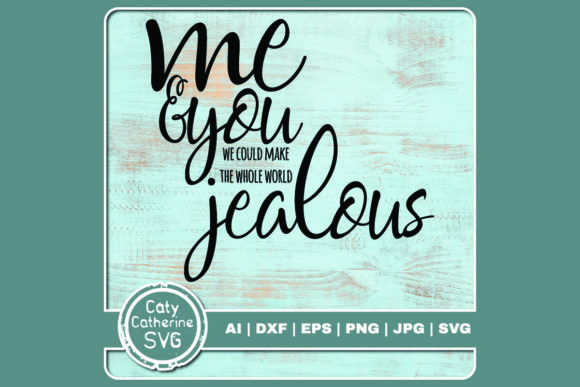
The phrase "Me You Make the Whole World Jealous" carries a specific energy. It is bold, confident, and undeniably romantic without being overly saccharine. When I first opened the machine embroidery design, the layout immediately caught my eye. It doesn’t feel cluttered. The text is arranged in a way that guides the eye naturally across the chest or center of a garment, creating a balanced visual weight. For a small business owner, this balance is everything. A design that feels too heavy on one side can cause puckering; one that is too sparse can look cheap. This design hits that sweet spot where it feels substantial but breathable.
The mood it creates is one of playful partnership. It works beautifully for couples, best friends, or even as a humorous nod to a close-knit team. In terms of visual personality, it feels modern yet timeless. It isn’t tied to a fleeting trend, which means it has longevity in your design assets library. It screams "handmade product" because it relies on the texture of thread to convey emotion, something a simple print often struggles to do.
Real-World Application: Where Does It Shine?
I have been thinking about exactly where this embroidery project fits best in the current market. Let’s talk about real scenarios. Imagine you are preparing a custom order for a couple celebrating their anniversary. You pull out a high-quality canvas tote bag design. Stitching this quote onto the front panel gives it an instant boutique feel. The contrast between the sturdy canvas and the soft sheen of the embroidery threads elevates the perceived value of the item. Customers trust handmade presentation, and a well-executed stitch job signals quality before they even touch the bag.
But let’s go beyond bags. Think about sweatshirt embroidery. Hoodies are a staple in craft fair booths and online shops alike. This design fits perfectly centered on the chest of a crewneck or laid back on the shoulder of a hoodie. It transforms a basic blank into a personalized gift that feels exclusive. Similarly, for baby embroidery, while the sentiment is romantic, it can be adapted for family matching sets. Picture a mother’s tote bag and a baby’s onesie with coordinated elements. It creates a cohesive brand story for families, which is a powerful selling point for Etsy sellers.
It also works exceptionally well as an embroidered patch. If you are adding patches to denim jackets or backpacks, this design provides enough detail to be interesting but enough negative space to keep the stitching clean. For holiday embroidery, especially around Valentine’s Day or anniversaries, this is a top-tier choice. It captures the spirit of the occasion without feeling generic.
Technical Performance and Stitch Clarity
When evaluating any digital embroidery file, I always ask: does it hold up? The clarity of the lettering in Me You Make the Whole World Jealous is impressive. However, typography in embroidery is tricky. Letters that look perfect on a monitor can turn into muddy blobs if the stitch density is off or if the thread colors lack contrast. In this case, the spacing allows for clear separation between words, which helps maintain readability.
I recommend using a satin stitch for the outlines of the letters to give them a crisp edge, perhaps paired with a fill stitch for any decorative hearts or accents included in the graphic. If the design includes smaller script elements, ensure your machine can handle the precision. A running stitch might be used for finer details, but be wary of thread breakage on complex curves. The key here is to test the stabilizer choice. For woven fabrics like cotton or linen, a cut-away stabilizer is non-negotiable to prevent shifting. For knits, like those found in custom apparel such as t-shirts, a tear-away or wash-away stabilizer might be necessary depending on the desired finish, though cut-away remains safer for durability.
Where to Use With Caution
No design is perfect for every surface. There are specific situations where Me You Make the Whole World Jealous might struggle. Avoid placing this on highly textured fabrics like bouclé or thick chenille unless you are prepared for the stitches to disappear into the nap. Thin fabrics, such as sheer chiffon or lightweight jersey, require extra care; the weight of the embroidery could distort the material, leading to a wavy, unprofessional look.
Curved surfaces present another challenge. While this design can work on a cap, the curvature of the front panel can stretch the letters if not hooped correctly. You must use proper techniques to manage the curve, or the text may appear distorted. Additionally, be mindful of small details. If the original vector includes tiny flourishes, these might get lost in a small hoop size. Always inspect small details before committing to a large production run.
Dense stitch areas should also be monitored. If the design packs too much thread into a small area, it can become stiff and uncomfortable to wear, particularly on items like aprons or pillow covers that need to remain soft. Check the hoop size limitations of your machine to ensure the entire design fits comfortably without cutting off important elements.
Practical Designer Notes for Success
Before you start producing small shop products with this design, follow these practical steps to ensure professional results:
- Test on Scrap Fabric: Never run a new design directly onto your final product. Test it on a scrap of the exact same fabric to check for puckering, tension issues, or color bleeding.
- Check Thread Contrast: Look at your thread colors against your fabric. Light thread on light fabric will vanish; dark thread on dark fabric might look muddy. Use a printable mockup tool to simulate the look before stitching.
- Review Stitch Density: Ensure the density is appropriate for the fabric type. Too dense, and it becomes rigid; too sparse, and the backing shows through.
- Inspect Small Details: Zoom in on the digital file. Are there any tiny corners or thin lines that might not render well in thread?
- Black and White Mockups: View your design in black and white. This helps you see the true shape and balance of the composition without being distracted by color.
- Confirm Licensing: This is critical for commercial embroidery and craft business owners. Verify the license terms provided by Caty Catherine. Some files are for personal use only, while others allow commercial sales of finished goods. Do not assume; check the documentation.
Final Verdict
Me You Make the Whole World Jealous is more than just a cute phrase; it is a versatile, emotionally resonant design that adds significant value to handmade projects. Its strong visual personality makes it stand out in a crowded marketplace, appealing to buyers who want something unique and meaningful. From kitchen towels to nursery decor, its adaptability is its greatest strength. By paying attention to technical details like stabilizer choice and thread contrast, you can transform this graphics asset into a stunning finished product that customers will cherish. It is a smart addition to any embroidery file collection, offering both aesthetic appeal and commercial potential.